Where to Put Your Alarm (Phone) at Night to Actually Wake Up
The short answer
Put it where you have to stand up to reach it
Short answer: put your alarm (phone) across the room — far enough that you have to get out of bed and stand up to turn it off. Standing breaks sleep inertia and stops the autopilot snoozing that happens when the phone is within arm's reach. The exact distance matters less than the rule: it must be impossible to silence without leaving the bed.
Where you place your alarm at night is one of the few wake-up tricks that's almost free and genuinely works — but only if you get the details right. Put it too close and you'll snooze it in your sleep without remembering. Put it across the room with a weak alarm and you'll just sleep through it from farther away. Here's the case for across-the-room, the sane exceptions, and how to make the placement actually pay off.
The main case
Across the room forces you upright
When your alarm is on the nightstand, you can silence or snooze it without your brain ever coming fully online. That's sleep inertia — pulled out of deep sleep, your decision-making is offline and your hand does the snoozing on autopilot. You won't remember it.
Putting the phone across the room removes the option. To stop the sound you have to stand up and walk, and the act of standing gets blood flowing and starts pulling you out of that fog. It's the same logic behind alarms you can't ignore: the goal isn't just noise, it's getting your body vertical before the snooze reflex wins.
The exceptions
When across the room is too much — and a sane distance
Across-the-room isn't always practical. If you share a bed, a blaring alarm on the far wall wakes your partner too. If you have mobility limits, or your bedroom is tiny, the gap may be just a few feet either way. And some people simply walk over, silence it, and crawl back in — distance alone doesn't fix that.
The sane rule: place it out of arm's reach but in earshot — a dresser or shelf two to three steps from the bed. Far enough that you must stand, close enough that the sound still does its job. The moment you're up, turn on a light; staying horizontal is what undoes the whole trick.
Sleep hygiene
Keep the phone off your pillow
There's a second reason to move the phone away that has nothing to do with snoozing. A phone on the pillow makes late-night scrolling effortless, and the bright screen right before sleep makes it harder to drift off. Keeping it a few feet away removes the temptation by default.
This is where using your phone as the alarm becomes an advantage rather than a problem: place it across the room and you solve both at once. You can't doomscroll a phone you'd have to get out of bed to reach, and you can't snooze one either. If you're rethinking your whole setup, our guide on how to never oversleep for work pairs placement with a wake routine that sticks.

Swipe to see more
Make it worth it
Placement only works with a loud, reliable alarm
Distance is half the equation. A quiet alarm across the room just means you sleep through it from farther away — and a music or streaming alarm that goes silent overnight defeats the whole plan. Pair smart placement with an alarm that can't fail:
- Loud: plays above your phone's normal volume ceiling, so it carries across the room.
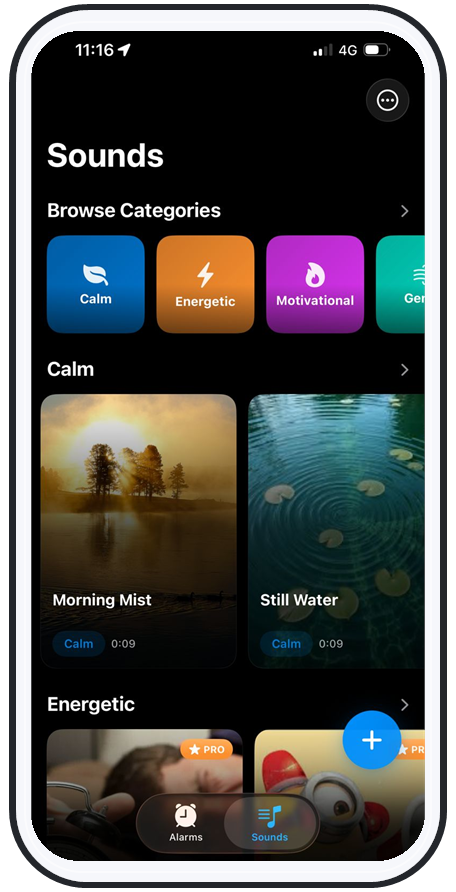
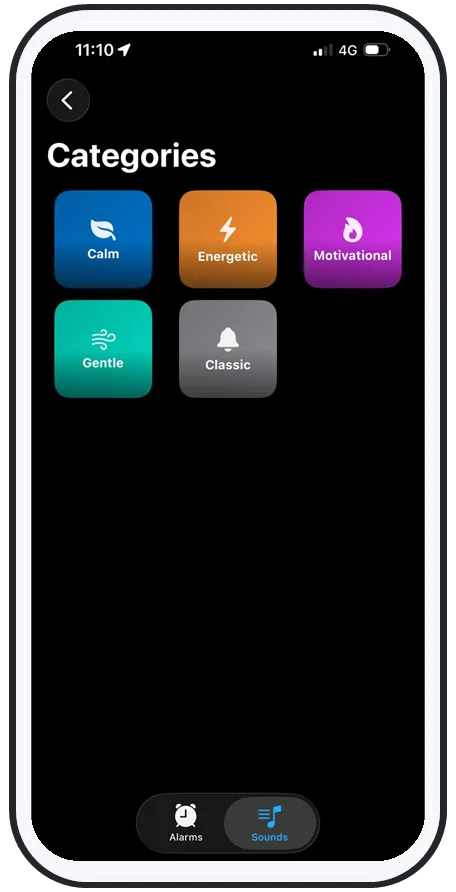
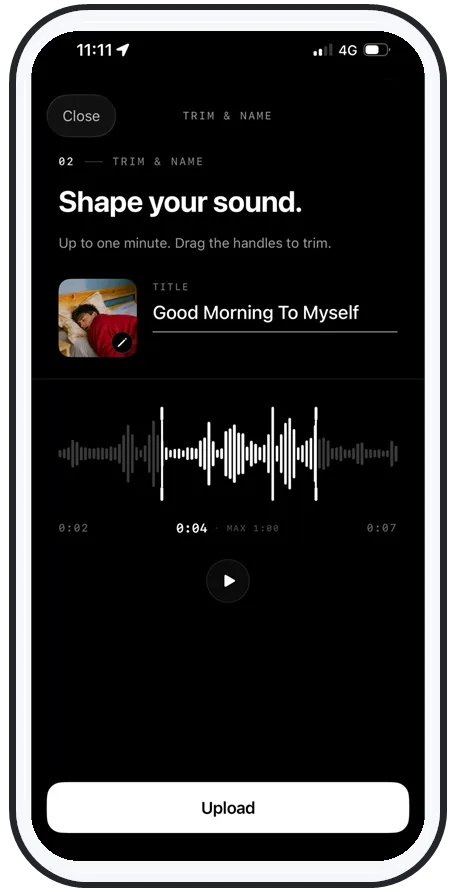
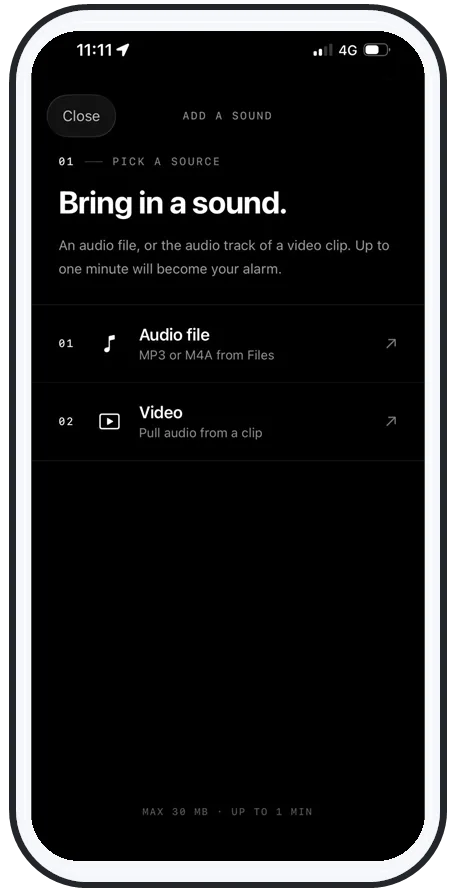
- Hard to tune out: wake to any song or your own recorded voice, and rotate sounds so your brain never habituates.
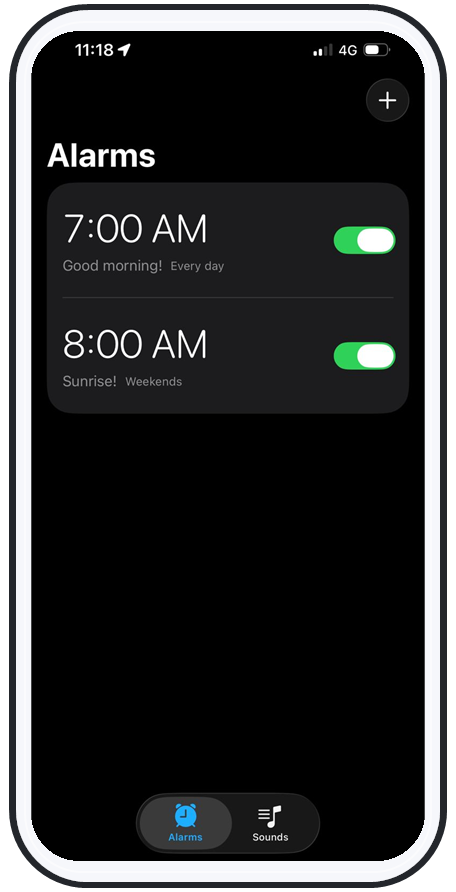
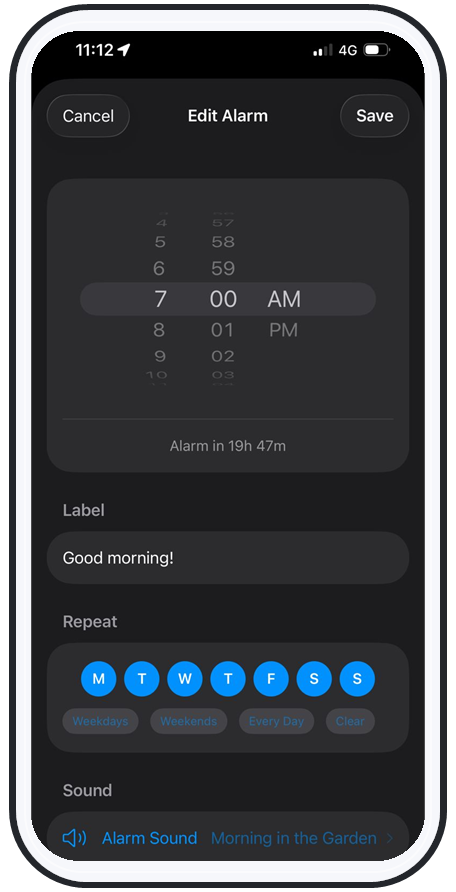
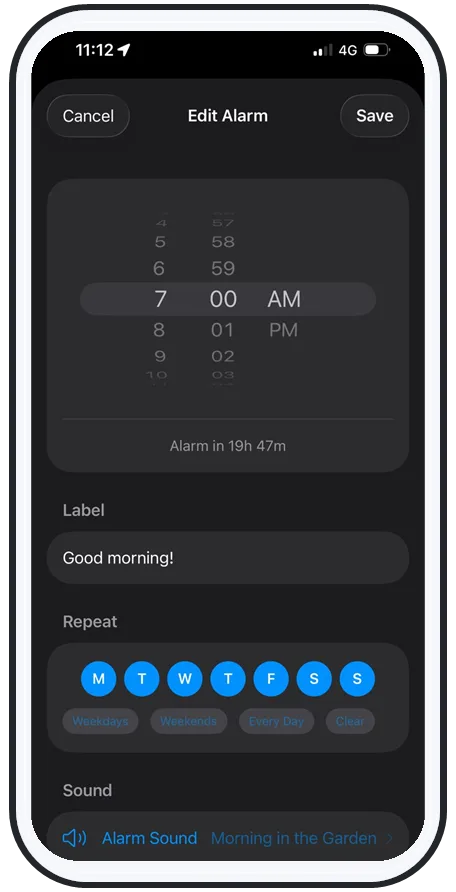
- Reliable: sounds download for offline playback and schedule through Apple's AlarmKit, so it rings on silent, on Do Not Disturb, on Focus, on the lock screen, and with no signal.
That combination is exactly what AlarmiFex is built for — see how the features work or grab it on the App Store.
Lock it in
Build the placement into a routine
Placement works best as a habit, not a one-off. Charge the phone in the same across-the-room spot every night so you never "just this once" leave it on the nightstand. Put the charger near a light switch so standing up and turning on the light becomes one motion.
Give it a week. The first few mornings the walk feels brutal; after that, your body learns that the alarm means stand up, and the snooze reflex loses its grip. For more on what actually breaks heavy sleepers out of bed, see the best alarm apps for heavy sleepers.
Frequently asked questions
Where should I put my alarm clock to actually wake up?
Put it across the room, far enough that you have to stand up and walk to turn it off. Standing up gets your blood flowing and breaks the sleep inertia that makes you snooze on autopilot. The exact distance matters less than the rule: it must be out of arm's reach so silencing it is impossible without leaving the bed. If across the room feels extreme, even a dresser two to three steps away works as long as you can't grab it lying down.
Should I put my alarm across the room?
For most heavy sleepers, yes. Across-the-room placement forces you upright, which is the single most effective way to beat the autopilot snoozing that happens when the phone is within reach. The trade-offs are noise for a partner and the temptation to climb back into bed — so pair it with a loud, hard-to-ignore alarm and, ideally, turn on a light the moment you're up. If you share a bed or have mobility limits, a nightstand two to three steps away is a reasonable middle ground.
Is it bad to keep my phone next to my bed at night?
Keeping the phone on the pillow or right beside your head makes late-night scrolling effortless and puts the bright screen in your face right before sleep, both of which hurt sleep quality. For sleep hygiene, keep the phone off the bed and a few feet away. If you use it as your alarm, placing it across the room solves the wake-up problem and the scrolling problem at once — you can't doomscroll a phone you'd have to get out of bed to reach.
Does putting my alarm across the room actually work?
It works only if the alarm is loud enough to pull you out of deep sleep in the first place, and only if you don't get back into bed. A quiet alarm across the room just means you sleep through it from a greater distance. Pair the distance with an alarm that plays above your phone's normal volume and rings even on silent, so getting up is the only way to make it stop — then turn on a light to stay up.
Try an alarm that actually goes off
AlarmiFex wakes you to any song or your own voice — extra loud, even on silent, even offline.