The Best Alarm Sound for Heavy Sleepers (Backed by How Your Brain Wakes)
The short answer
Loud is only half the answer — novel is the other half
Short answer: the best alarm sound for heavy sleepers is one that's both loud and unfamiliar. Your brain habituates to a sound it hears every day and tunes it out, so volume alone fails. Choose a sound with a rising pitch, irregular rhythm, and harsher frequencies — or a song with a real build and drop — and swap it out regularly so it never feels predictable.
If you've ever slept clean through a maxed-out alarm and woken in a panic, you already know the truth: cranking the volume isn't enough. Two things wake a heavy sleeper — how loud the sound is, and how new it feels. Get both right and the same brain that ignored a siren will jump at a four-second clip. Here's exactly what to choose, what to avoid, and how to keep it working week after week.
The science
The sound traits that actually pull you out of deep sleep
Not all loud sounds are equal. Your sleeping brain is a filter built to ignore steady, predictable noise (a fan, traffic) and react to anything that signals "something's changing." The most wake-effective alarm sounds share a few traits:
- Rising pitch: a tone or melody that climbs reads as urgency and is harder to ignore than a flat beep.
- Irregular rhythm: uneven, syncopated patterns stop your brain from predicting — and filtering — the next beat.
- Harsher mid-to-high frequencies: bright, slightly grating tones cut through better than warm, mellow ones.
- A real build and drop: music with dynamic swings — a chorus that slams in, a bass drop — keeps your brain engaged instead of lulled.
This is why a soft chime fails and a chaotic, high-energy track works. If you want the deeper reason your brain ignores some sounds entirely, the best alarm apps for heavy sleepers round-up breaks down the wake response in more detail.
Swipe to see more
Personal beats stock
Why your own song — or your own voice — beats any default tone
Stock alarm tones share two weaknesses: they're impersonal, and everyone hears them so often that the brain has already learned to ignore them. A sound you chose fixes both.
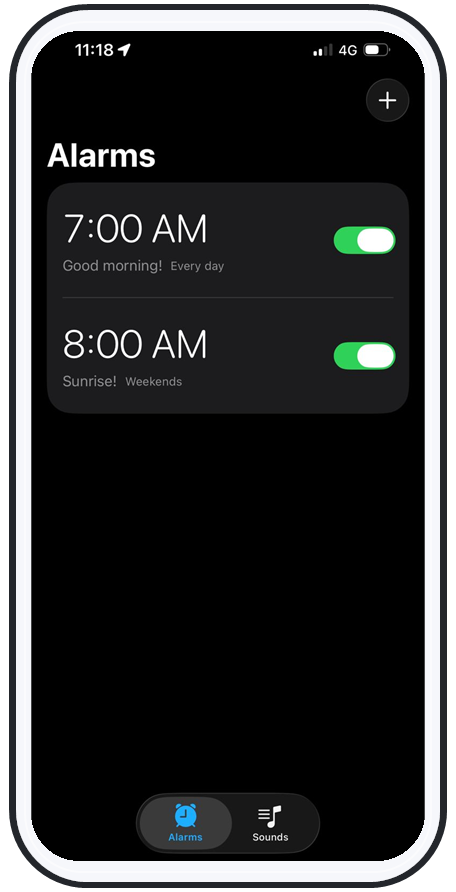
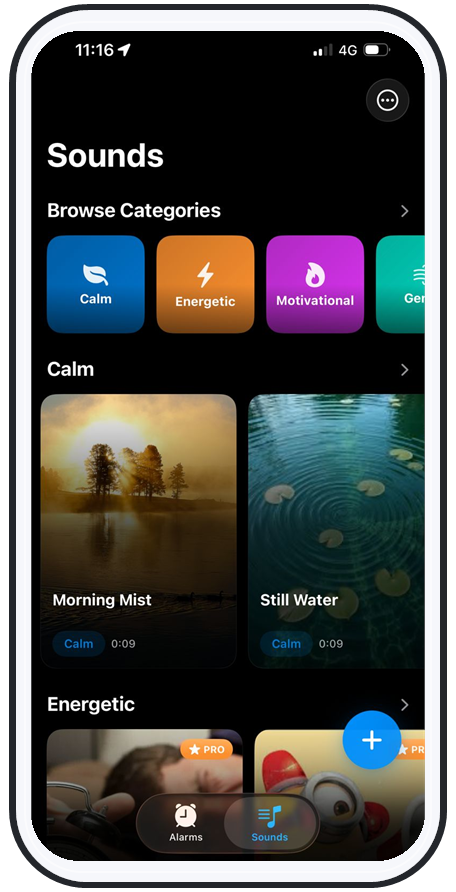
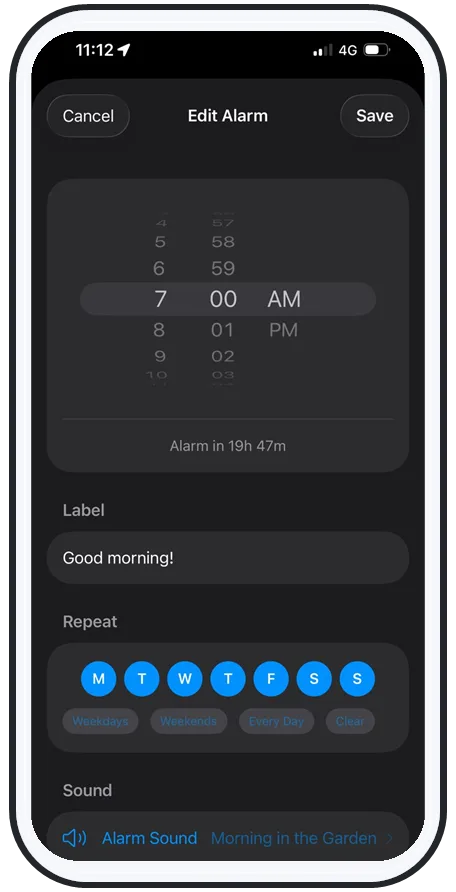
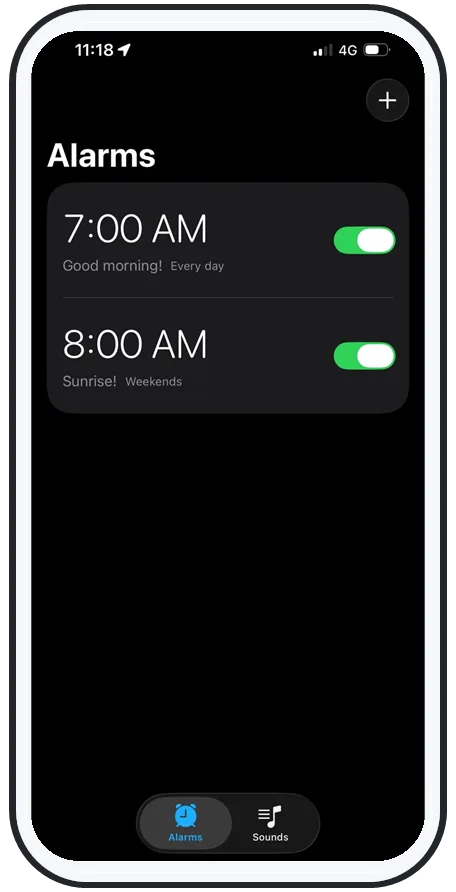
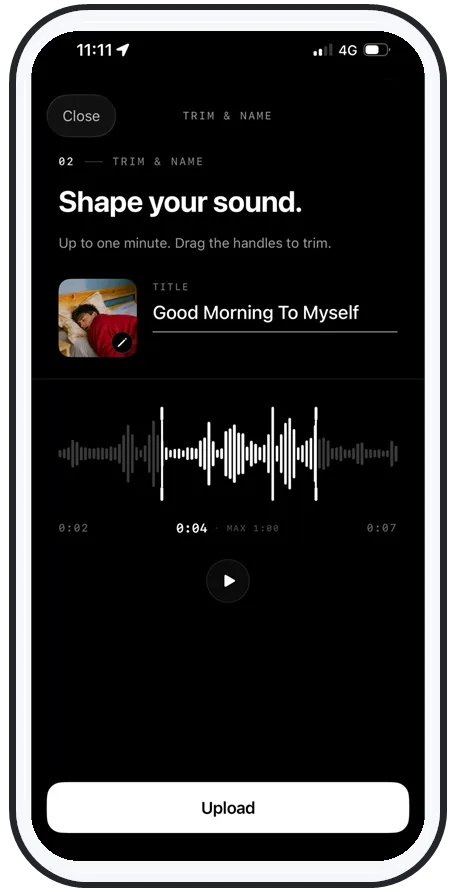
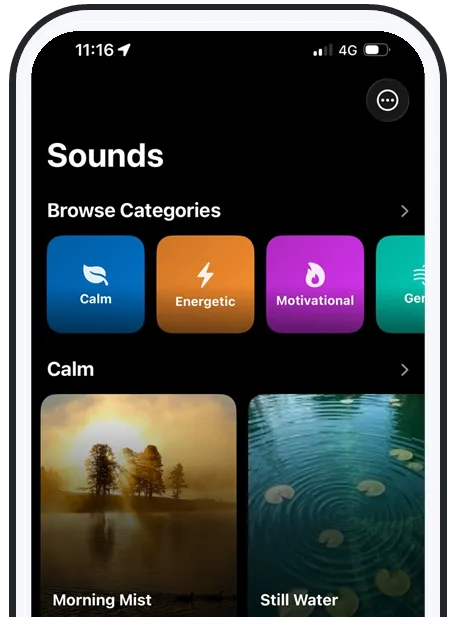
A song you actually like carries emotional weight and has dynamic changes — a vocal hook, a drop — that keep you engaged instead of tuning out. Your own recorded voice is the underrated upgrade: a familiar voice calling your name is almost impossible to dismiss as meaningless noise, and you can trim it to the most jarring few seconds. AlarmiFex lets you wake to any song on iPhone or your own trimmable voice recording — handy if a song still isn't doing it on its own.
What to avoid
The 'soothing' sounds that quietly sabotage heavy sleepers
Most default sound libraries are full of alarms designed to be pleasant — which is exactly the wrong goal when you genuinely struggle to wake. Steer clear of:
- Soft chimes, harp and marimba tones — warm and easy to sleep straight through.
- Slow fade-ins — the volume ramps up so gradually your brain adapts to each step and never crosses the wake threshold.
- White noise and calm nature sounds — steady and predictable, the textbook profile your brain filters out.
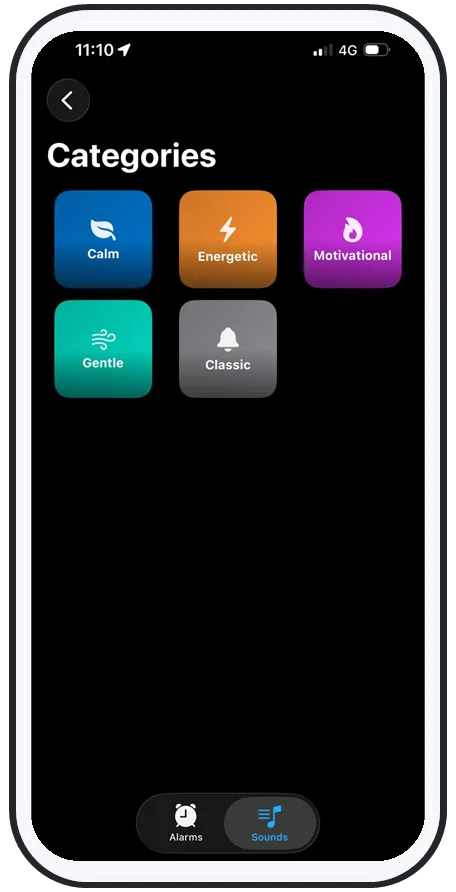
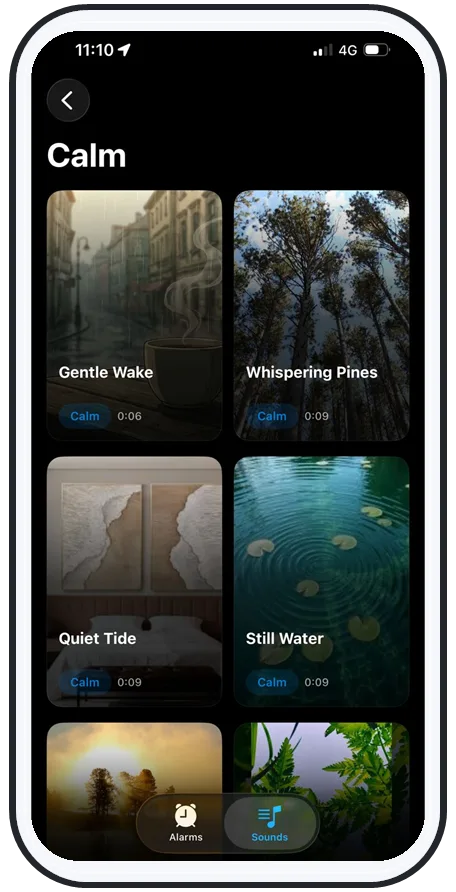
"Gentle wake" features are built for light sleepers who want a calm start. If you routinely sleep through alarms, a gentle sound is working against you — and if you also need real above-system-volume loudness, those soft tones never had a chance.
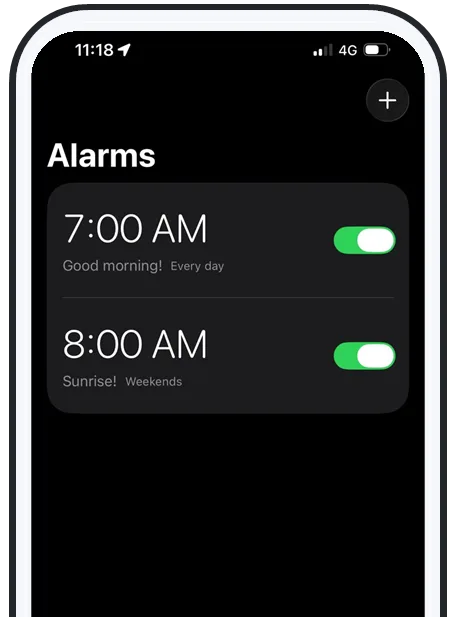
Keep it working
Rotate your sound so your brain never memorizes it
Here's the part most people miss: even the perfect alarm sound has an expiry date. After a week or two of the same track, your brain learns it's harmless and the wake response fades — the sound didn't get quieter, your brain stopped reacting. That's habituation, and the only cure is novelty.
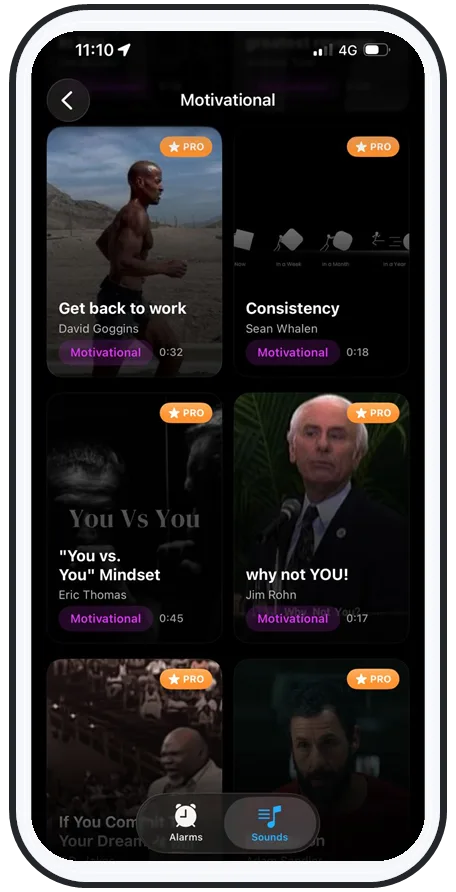
So treat your alarm sound as something you cycle, not set once. Keep a small set of loud, distinct songs or voice clips and rotate them every one to two weeks — or the moment you notice you slept through. AlarmiFex makes this easy by letting you keep and swap multiple sounds, so each morning is just unfamiliar enough to trigger a real wake-up.
Put it together
Loud + novel + reliable — the full recipe
A heavy-sleeper-proof alarm sound checks every box at once:
- Loud: plays above your phone's normal volume ceiling, not capped at the ringer.
- Novel: a personal song or your own voice, rotated so it never goes stale.
- Right shape: rising pitch, irregular rhythm, a build and a drop — never a slow fade.
- Reliable: it has to actually play — on silent, on Focus, on the lock screen, and offline.
That last point matters as much as the sound itself: the best track in the world is useless if the alarm fails to fire. AlarmiFex is built around all four — see how the features work, or download it on the App Store and set your first loud, personal alarm in under a minute.
Frequently asked questions
What is the best alarm sound for heavy sleepers?
One that's loud and unfamiliar — not just one or the other. Your brain habituates to a sound it hears every morning and stops triggering a full wake-up, so even a blaring tone gets tuned out after a week or two. The strongest choice has a rising pitch, an irregular rhythm, and some harsher mid-to-high frequencies — or a song with a clear build and drop — that you swap out regularly. A song you like or your own recorded voice both beat a stock chime because they're personal and easy to keep fresh.
What is the loudest alarm sound to wake you up?
The loudest practical alarm plays above your phone's normal volume ceiling, because the standard ringer cap often isn't enough for a deep sleeper. AlarmiFex is built to push alarm volume above the system limit on iPhone. But raw loudness has a ceiling of usefulness — once your brain habituates, a louder version of the same sound still gets ignored. Pair high volume with a sound that changes regularly for far more reliable waking.
Why does a song wake me up better than a normal alarm tone?
A song you chose carries emotional weight and has dynamic changes — verses, a build, a drop, a vocal hook — that keep your brain engaged instead of filtering the sound out as background noise. A flat, looping tone is exactly the predictable, monotonous sound your sleeping brain learns to ignore. Your own recorded voice works the same way and adds urgency, because a familiar voice calling your name is hard to dismiss as meaningless.
What alarm sounds should heavy sleepers avoid?
Avoid gentle, gradual, ambient sounds: soft chimes, harp or marimba tones, slow fade-ins, white noise, and calm nature sounds. They're designed to be soothing — the opposite of what you need to break through deep sleep. A slow fade-in is especially risky because it can ramp up so gradually that your brain adapts to each step and never crosses the threshold that actually wakes you.
How often should I change my alarm sound to keep it working?
Rotate it roughly every one to two weeks, or as soon as you notice you're sleeping through it again. Habituation is what makes a once-effective alarm slowly stop working, so the goal is to never let your brain fully memorize the sound. Keep a small set of loud, distinct songs or voice recordings and cycle through them so each morning's sound stays just unfamiliar enough to trigger a wake response.
Try an alarm that actually goes off
AlarmiFex wakes you to any song or your own voice — extra loud, even on silent, even offline.